

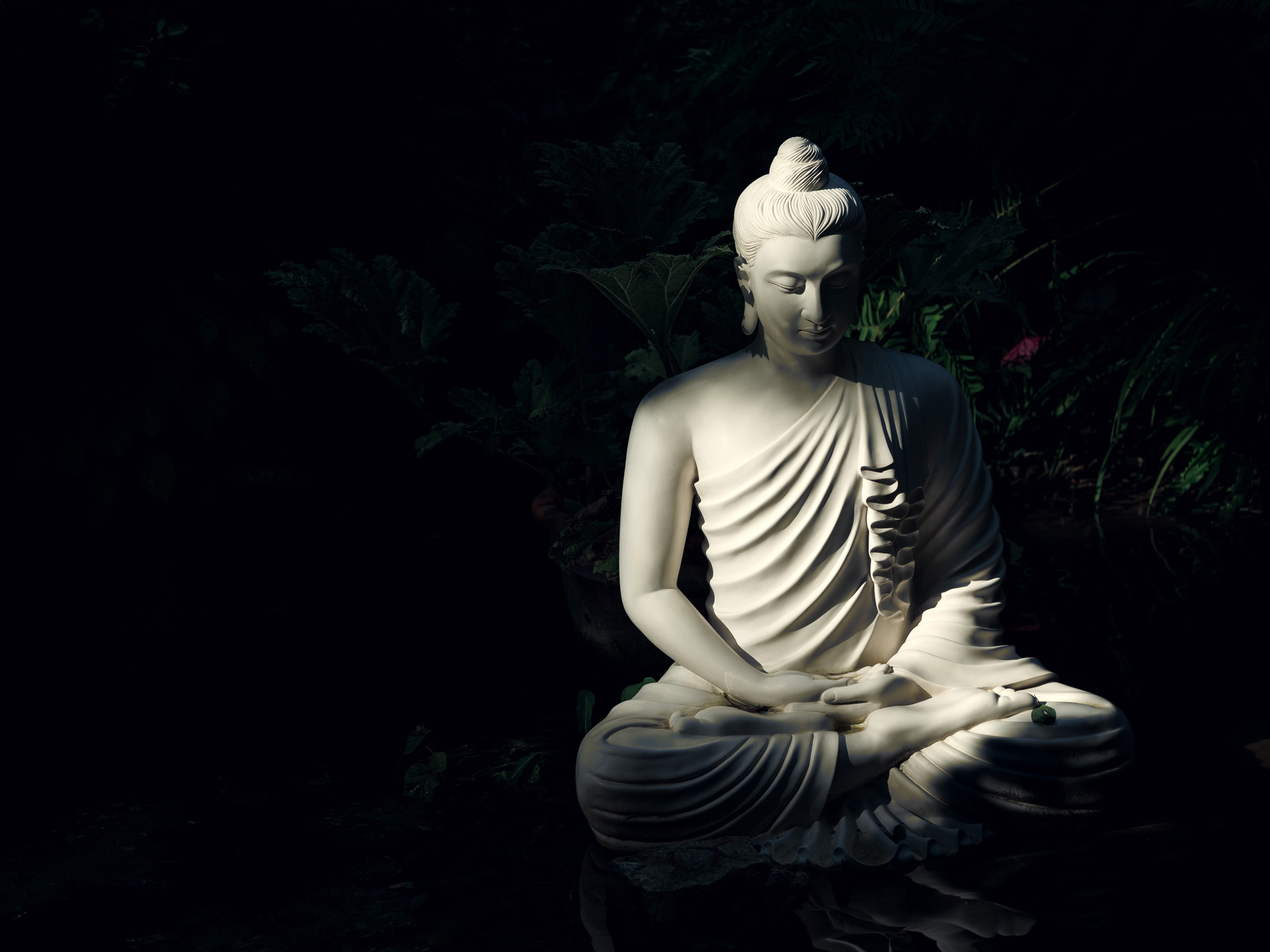
Does meditation belong to Buddhism?
One of the most common misconceptions about meditation is: ‘Meditation belongs to Buddhism,’ or ‘Anyone who meditates is Buddhist.’ Many people think that if you meditation, you must be Buddhist. If you follow another religion such as Christianity or Islam, you cannot meditate. Is that really true?
The Buddha meditates to attain enlightenment — that is true. But it does not mean meditation belongs only to Buddhism. In fact, meditation existed before Shakyamuni Buddha's time. Many enlightened teachers who were not Buddhists also used meditation as a profound practice to connect with their true being.
Meditation is meditation — it belongs to no one
Meditation is an important part of the enlightenment journey of The Buddha, but meditation does not belong exclusively to any religion. It can be said that meditation is an innate human capacity, a natural state anyone can access.
The scriptures clearly record: The Buddha meditates and it was through this path that he attained complete awareness. Although he taught as many as 48,000 Dharma methods, meditation is the central path — the bridge between ordinary consciousness and the universal wisdom within each person.
But the meditation of The Buddha is not the same as all other kinds of meditation. Buddhist Meditation has a profound nature, going beyond simply quieting the mind to the stage of insight meditation, leading to awakening.
Meditation has no religious boundaries
A frequently asked question: Can people of other religions meditate?
The answer is: Anyone can meditate. If you are Christian, you can still meditate. If you are Muslim, you can also meditate. Even if you are an atheist, you can still meditate.
Meditation does not require belief in any religion or the label of “follower.” Because meditation is not a religious ritual but a way to turn inward and meet yourself again. Prayer is how you speak to God. Meditation is how you listen to God and the vast universe within yourself.
Why did the Buddha meditate?
There is a very profound reason why The Buddha meditates – that was to find the path to ending suffering. He left a life of luxury, relinquishing both power and family, to seek the path of liberation. After many years of ascetic practice and meditation, he finally attained Enlightenment beneath the Bodhi tree.
Meditation – for the Buddha – is not the destination, but a means to awakening, to clearly see the nature of suffering and the path to ending it.
Meditate to become empty or to become the universe?
Another common beginner misconception is meditating to “become empty”: an empty mind, without wandering thoughts or thinking. This is a necessary stage, but not the destination.
In Awakening Meditation – a modern practice method opened up from the roots of meditation In Buddhism, people do not meditate to “force” the mind empty, but to expand consciousness. From emptiness—to becoming everything. The Buddha meditates is not to escape the world but to understand that He and the world are one.
Therefore, meditation is not a rejection of life but a profound union with it.
Meditation is not an expense — it is a wise investment
Many people think meditation is like going to the gym or learning yoga, requiring money for classes, courses, or teachers. But meditation does not have to be expensive. In many places it is shared completely free, such as 7-day Awakening Meditation course or meditations in the free meditation app created from a giving heart.
Even where tuition is charged, that is not wrong. Provided the meditation guide maintains a pure heart and clear aspiration, charging fees can help balance karma — keeping students from feeling indebted or attached to the teacher.
Furthermore, compared with what you receive from meditation, the money you spend — if any — is truly negligible.
- How much money in exchange for a sleep well?
- How much money to buy a peaceful day?
- How much money does it take to heal a wounded heart?
Meditation, rightly viewed, is the wisest investment in your body, heart, and mind. One unit spent on prevention saves 20 on treatment and 100 on emergency care. So which is truly expensive?
Meditation – A shared remedy for shared suffering
Suffering is the common denominator. Whoever you are, wherever you live, whatever your religion, the same sufferings remain: love, money, career, illness, loss…
And meditation is the shared medicine for that shared suffering. Nonsectarian. Without doctrinal distinctions. Without labels. Without discrimination.
Anyone can meditate.
The Buddha meditates, and anyone can do it.
Join the Spiritual Awakening community
If you are on a journey to rediscover yourself, join the Facebook community now:
👉 Spiritual Awakening Community
Here, you will:
- Meet thousands of people practicing meditation every day
- Receive direct guidance from Teacher Tạ Minh Tuấn and teaching assistants
- Sharing—learning—healing—raising awareness
- Join live classes, in-person classes, and intensive courses
Who is Teacher Tạ Minh Tuấn?
Teacher Tạ Minh Tuấn is a entrepreneur, educator, and spiritual guide in Vietnam — https://taminhtuan.vn/. Before becoming the initiator and spreading the journey of Spiritual Awakening, the Teacher was once very successful in the field of entrepreneurship education and business in service of others. However, with a deep awareness of spirituality's role in healing and human development, the Teacher decided to give up everything to serve wholeheartedly the community's awakening journey.
Recommended materials and books
📘 1. “Anyone Can Meditate”—Author: Tạ Minh Tuấn
A foundational book for beginners understand meditation correctly, especially the method Awakening Meditation. Guidebook:
- How to meditate for psychological and emotional healing
- Awareness meditation in ordinary life
- Illuminating meditation and therapy through the light of wisdom
👉 Buy books at: 🌞 Facebook page: Minh Books 🌞 Shopee: MinhBooks Official
📗 2. The Book “The Awakening Journey”
The book is a spiritual map, for those wrestling with questions about:
- Life – death – karma and rebirth
- True life purpose
- How to return to your whole, true nature
The book uses an approachable, profound style of explanation, bringing an awakening perspective but still full of practical application, helping you healing, illumination, and awakening spiritual wisdom.
Conclusion: Meditation is not a privilege — It is a shared path
Through our exploration, we clearly see that The Buddha meditates not because He was a Buddhist, but because He was a human being seeking truth. Meditation is the path back to that truth.
We—whoever we are—are also on a journey to find peace, awakening, and a return home.
Meditation is not anyone's exclusive privilege but a shared gift for humanity.
Wherever you are on your journey, know this: you do not need to change your religion, abandon your beliefs, or travel far… You only need to sit down, close your eyes, and begin listening.
Within you is an entire universe.